
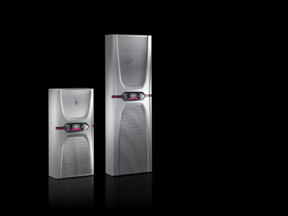
Built for Motion & Built to Last
Rittal's Blue e+ Dynamic cooling series is engineered for high-vibration, mission-critical environments and is DNV-CG-0339 tested for reliable onboard use, such as in engine rooms.
With a rugged mechanical design and proven stability, these units keep enclosures cool and equipment online across ports, crane systems, automated warehousing, and airport baggage-handling systems.
Blue e+ Dynamic Cooling Units are:
- More Efficient – Extremely high seasonal energy efficiency ratio (SEER) of > 6.2
- More Flexible – Wide-ranging versatility for dynamic applications with no need for complex infrastructure; even retrofits can be easily implemented
- More Reliable – Highly dependable, less maintenance-intensive, and ready to use at short notice
- Simpler – Streamlined planning, operation, and installation
Blue e+ Dynamic – DNV-Certified Cooling Units for Maritime and
All Dynamic Sector Applications and Installations
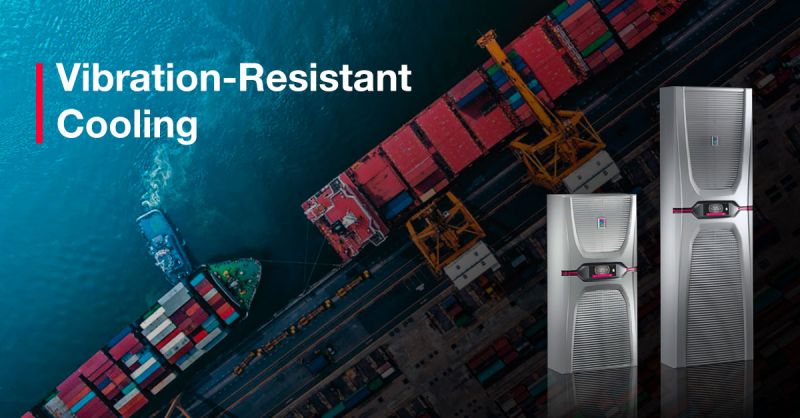
Extreme conditions demand robust solutions. Thanks to their sturdy physical construction, these Blue e+ Dynamic cooling units are especially suitable for use in many industry sectors that involve dynamic conditions and episodes, for example in the maritime industry, in logistics and at airports.
DNV certification is recognized globally as a mark of quality and safety and guarantees the reliability of components and systems with regard to those hazards and risks faced at sea and serves as the de facto benchmark reference in the marine and offshore sector. Rittal's Blue e+ Dynamic cooling units have demonstrated and proved complete compliance with DNV’s strict quality and safety criteria. As standard. The independent test laboratory Phoenix Testlab subjected Rittal Blue e+ Dynamic cooling units to a comprehensive series of testing and evaluation protocols. A sine-sweep test was followed by broadband noise testing over the entire frequency range. Units were vibrated for a total of 7.5 hours, namely for 2.5 hours for each spatial axis. Next, they were moved on to a climate chamber, where they were required to endure several temperature cycles, including cycles at high humidity levels. The test series was concluded with simulated ship movements and EMC measurements addressing both interference emissions and immunity.
Maritime Industry
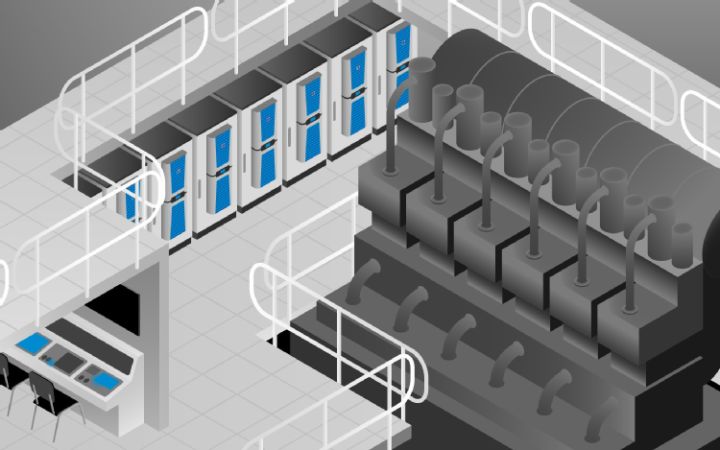
Whether vibration from the ship’s diesel engines, the erratic and volatile swell of the ocean waves or heat and humidity – the engine room is in every sense an extreme environment. Switchgear systems and their cooling solutions must be designed accordingly to withstand them.Logistics
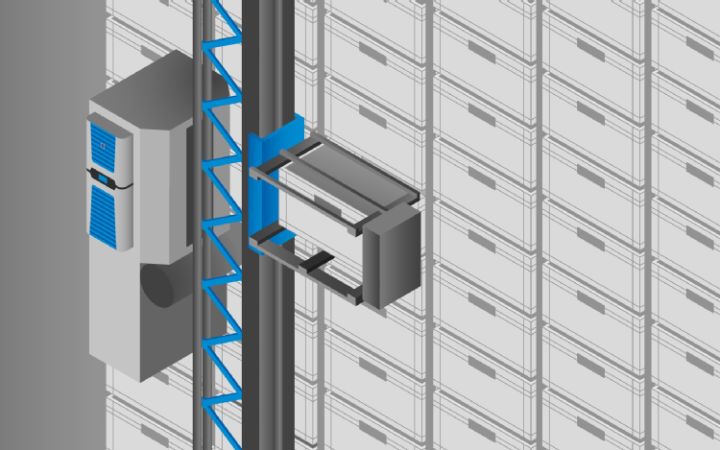
In high-bay warehouses, storage and retrieval robots, trucks and other loading equipment are constantly in motion – moving up and down and back and forth along the aisles. It is imperative that the enclosures and cooling units mounted on the robots are particularly vibration-resistant.Airports
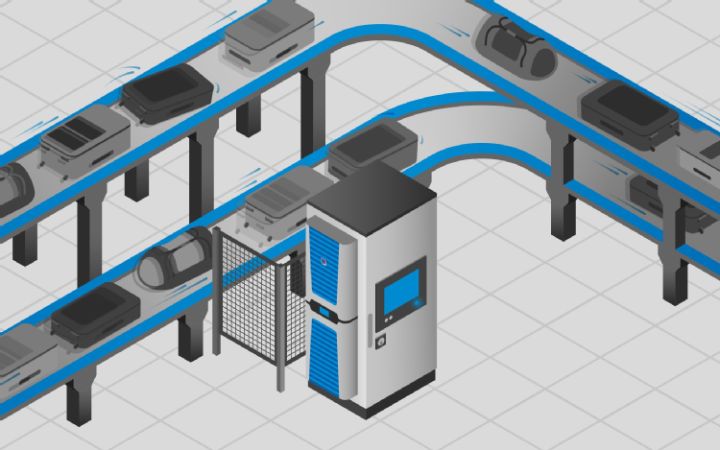
A typical airport baggage conveyor comprises several conveyor sections linked to each other at hub points. Several tons of baggage are handled every day. The adjacent switchgear must be unaffected by and resistant to vibration and sudden impacts.
Contact Your IES Team to Discuss Your Application